
Figs
The fig trees were the only thing on the plot that did not need rescuing. Nobody had touched them for years and they were fruiting anyway, which tells you something about figs.
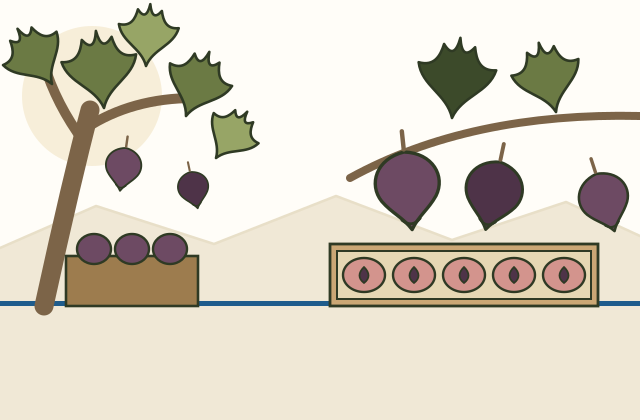
June, then August 34 trees
Two crops a year, and only the second one matters. The June figs are a treat for whoever is standing under the tree. The August figs are the ones that get dried and turned into jars.
What is planted
Thirty four trees, scattered rather than in rows, mostly along the field edges and the bottom of the terrace walls where they seed themselves anyway. At least thirty of them predate us. Fig trees in this part of the Algarve tend to end up wherever a bird sat, and then someone decides not to cut them down.
- Pingo de Mel, the honey drop fig, is the one we have most of. Pale green skin going yellow, pinkish inside, very sweet, ripens in the first half of August. It splits at the eye when it is ready and a bead of syrup comes out, which is where the name comes from and also why the wasps find it before we do.
- Bêbera types make up most of the rest. Bigger, darker skinned, deeper red flesh, and they come in later in August.
- Six or seven trees we cannot identify. They came with the place. One of them at the top of the second terrace makes the best drying fig we have and we have never worked out what it is.
We planted four new trees in 2020 from cuttings off the good unnamed tree. Fig cuttings root easily, which is the one generous thing about them. Three took. They fruited properly for the first time in 2024.
Two crops, and why only one counts
Figs carry a first crop, the breba, on last year's wood, and it ripens here around mid June. It is a small crop, the fruit is large and a bit watery, and it does not dry well. We eat it, we give it away, and occasionally a few go into a jam batch, but it is not a commercial crop for us.
The main crop sets on this year's growth and ripens from the first week of August through to about the middle of September. That is the one. It is denser, sweeter, and it dries. Most of what we harvest in a season comes off the trees in a three week window in August, which is why everything else on the smallholding stops during it.
Fig season, roughly
- March to May
- New growth. Nothing to do but keep the goats out, and we have no goats.
- Mid June
- Breba crop, ten days, eaten fresh.
- Early August
- Pingo de Mel starts. Picking every second day.
- Mid to late August
- Peak. Picking daily, drying daily.
- September
- Bêbera tail end, then it stops.
Picking and drying
A fig is ready when the neck bends and the fruit hangs rather than sticks out, and when the skin has gone slightly dull. If it is still shiny and pointing at the sky it is not ready, whatever colour it is. We pick with a twist of the stalk in the early morning while the fruit is still cool. Anything picked in the afternoon heat goes soft in the crate before it reaches the trays.
Drying is done outdoors on wooden trays with fly mesh over them, on trestles in full sun, brought inside every evening before the dew. Depending on the fruit and the week it takes three to five days. We split most of them so they dry faster and more evenly, which also means you can see what you are getting. The whole method is written up in a note about drying figs without a dehydrator, because people ask about it more than anything else we do.
We have never used a dehydrator and it is not for romantic reasons. August here gives you 35 degrees and single figure humidity for weeks at a time. Running an electric box in that weather to do something the air is already doing would be daft.
What a bad year looks like
Two things go wrong with figs. The first is rain in August. A wet week during the main crop splits the ripe fruit open and it sours on the tree within a day, and there is nothing you can do about it except pick everything close to ready and accept a lower grade. That happened to us in 2021 and we lost most of ten days of picking.
The second is heat, which is what we got in July 2025. Four days above 40 degrees hit the fruit that was swelling but not yet ripe. It stopped, went leathery on the tree, and never came back. We took perhaps 60 per cent of a normal main crop, and the dried grade was worse than the number suggests, because a lot of what we did pick was too small to split and dry well. That is the year that ate the fig jam batch, and we did not make any in 2025 at all.
Honest note on 2025
We ran out of dried figs from the 2025 crop in November and said so at the time rather than quietly substituting bought fruit. The 2026 crop, picked this month, has been much better, and dried figs are back in the pantry.
Where the fruit ends up
Split and dried on trays, most of it. What is left after the drying trays are full goes into Fig jam, which we make in three or four batches across August. Anything too ripe or too damaged to dry gets cooked the same day. Figs do not wait.
The Fig and drying afternoon runs a couple of afternoons in August, in the middle of all this rather than as a set piece. It is hot and sticky work and we say so on the page.
Where to next
Split, sun dried on trays, 250 gram box.
The trays, the mesh, the timing, and what goes wrong.
An August afternoon picking and laying out trays, 35 euros.