
Bitter orange marmalade
Made once a year from the six bitter orange trees, in a stretch of about three weeks in January and February. When it is gone it is gone until the following winter.
What is in it
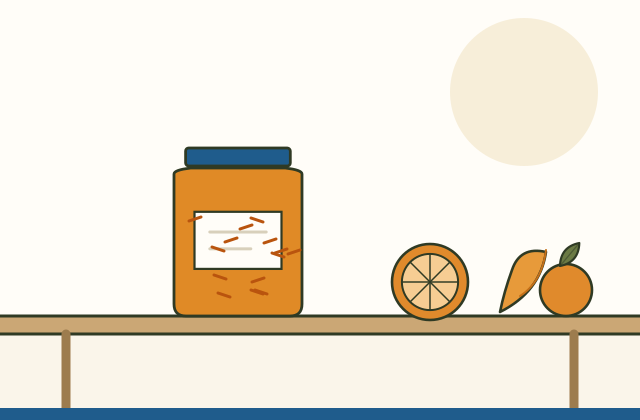
Bitter oranges, sugar, water, and a lemon. That is the whole list. No pectin is added because bitter oranges carry more than enough of their own in the pips and pith, which is what makes them worth the trouble.
The peel is cut by hand into a medium shred, thicker than a supermarket cut and thinner than a chunky marmalade. It is cooked in two stages, the peel softened first in water on its own for around an hour and a half, and only then the sugar in. Putting sugar in early sets the peel hard and no amount of further boiling will fix it.
What it tastes like
Properly bitter. Bitter oranges are not sweet oranges and this is not a sweet marmalade. There is a real edge to it at the finish. If your reference point is a soft, jammy breakfast marmalade this will be sharper than you expect, and that is deliberate.
The colour runs from deep amber to almost red depending on how long the batch was on the heat. We do not correct it between batches, so jars from the same year will vary a little in shade.
What it is good with
- Toast and a lot of butter, which is the obvious answer and still the right one.
- Stirred into the pan juices of roast pork or duck with a splash of vinegar.
- On a plate with a hard sheep cheese, where the bitterness does the work that a sweet chutney would do badly.
- In a steamed pudding or the bottom of a treacle tart, where it cuts through.
How long it keeps
Two years unopened in a cool dark cupboard, and it does genuinely improve over the first six months as the bitterness settles. Once opened, keep it in the fridge and eat it within about six weeks. There is enough sugar in it to be stable but it is not sterile once a spoon has been in it.
The lid should be domed and firm when you get it. If it clicks up and down, do not eat it and tell us.
How to order
There is no checkout on this site. Send us an email saying what you would like and how many, and we will reply with a total including postage and how to pay. Orders go out on Tuesdays.
Email hello@nossoparaiso.com, or use the form on the contact page if that is easier.
Minimum order is six jars or bottles, mixed however you like. Postage within mainland Portugal is 6.50 euros for up to six, 9.00 euros for up to twelve. Mainland EU is 18.00 euros for up to six and 26.00 for up to twelve. We do not ship outside the EU. Full detail is on the questions page.
When it is made
The bitter oranges colour in January and the whole crop comes off in two or three picking sessions. Everything is cooked within a week of picking. We make somewhere between 180 and 260 jars in a year depending on the crop, and that is the entire annual production.
If you want to see it being made rather than just eat it, the preserving kitchen day in February is exactly this, on the same stove, with the same fruit.
Where to next
The six bitter orange trees, and the 138 others.
Setting point, shred size, and what goes wrong in a small pan.
A February day making this, 48 euros.